-
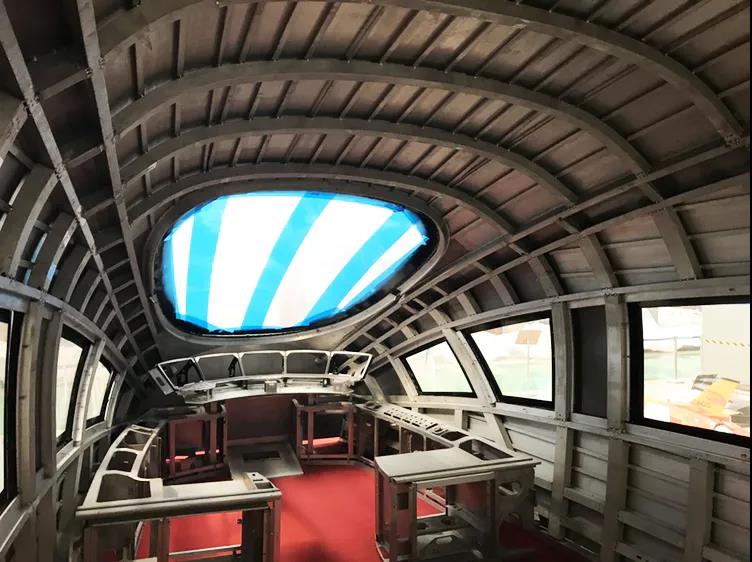
Stretch Forming Process of Rail Vehicle Body End Beams
During the stretch forming of end beam components, common defects include web buckling and sidewall cross-sectional distortion. The severity of cross-sectional distortion increases with the amount of stretch. For this component, a reasonable stretch amount is 8% of the profile length, and the corresponding mold surface correction should be set to 1.3 times the springback. In recent years, the rapid development of China’s high-speed rail and urban rail transit systems has directly driven the upgrading of related industrial chains. One of the most significantly benefited sectors is the aluminum processing industry. Rail vehicle bodies primarily use aluminum profiles and sheets…
-
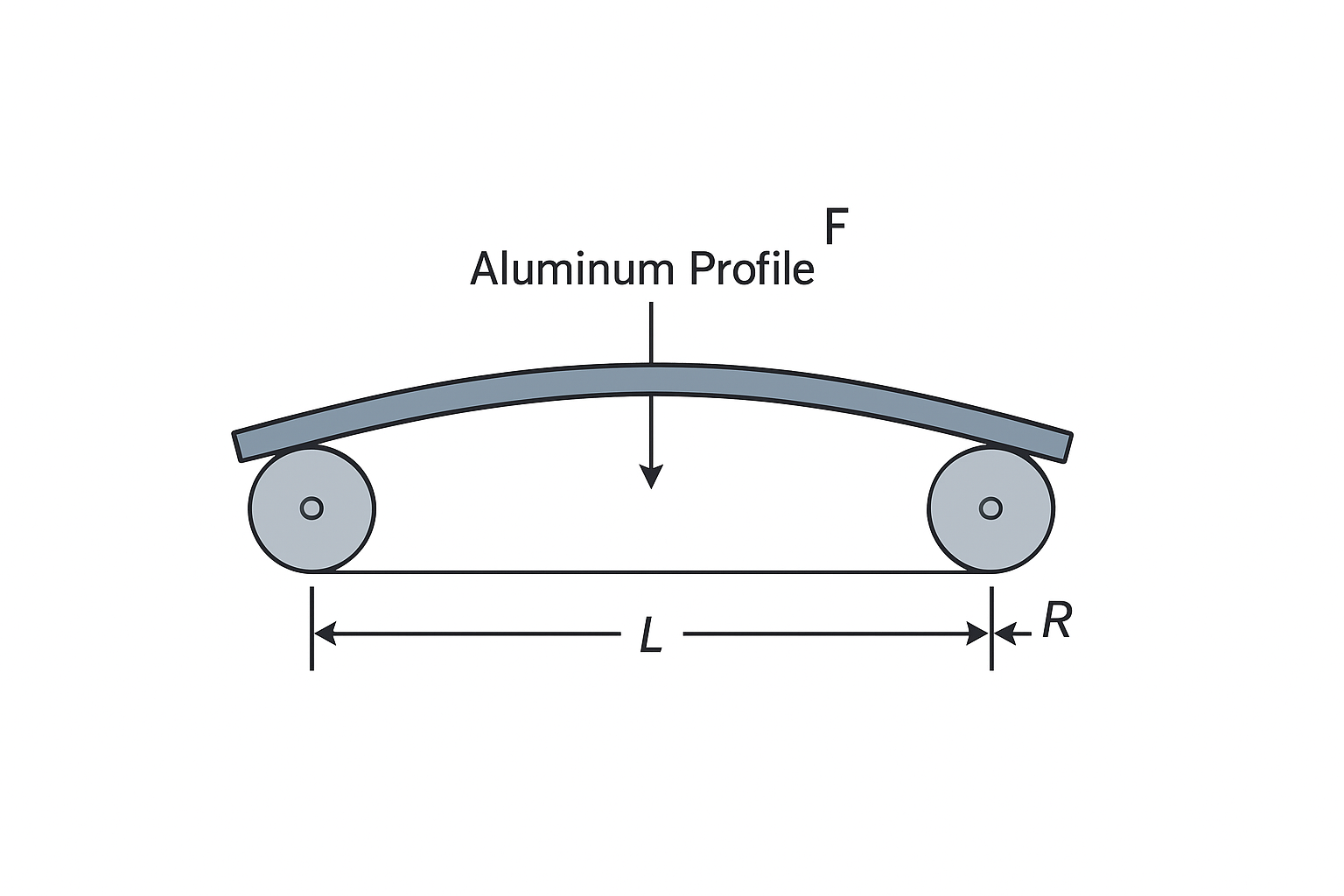
Aluminum Profile Roll Bending Force Calculator — Professional Edition
This calculator is designed for engineers who need precise roll-bending force estimations based on detailed section properties and material parameters.If you’re not working with structural calculations or simply want an easier way to check bending feasibility, we’ve also prepared a more user-friendly version.You can try the simplified calculator here:Aluminum Profile Roll Bending Calculator — Standard Edition Aluminum Profile Roll Bending Force Calculator — Professional Edition Calculate theoretical & actual bending forces with safety factor Profile & Material Parameters Elastic Modulus (GPa) Moment of Inertia (cm⁴) Roller Span (cm) Deflection (cm) Roller & Process Parameters Profile Thickness (cm) Roller Radius (cm)…
-
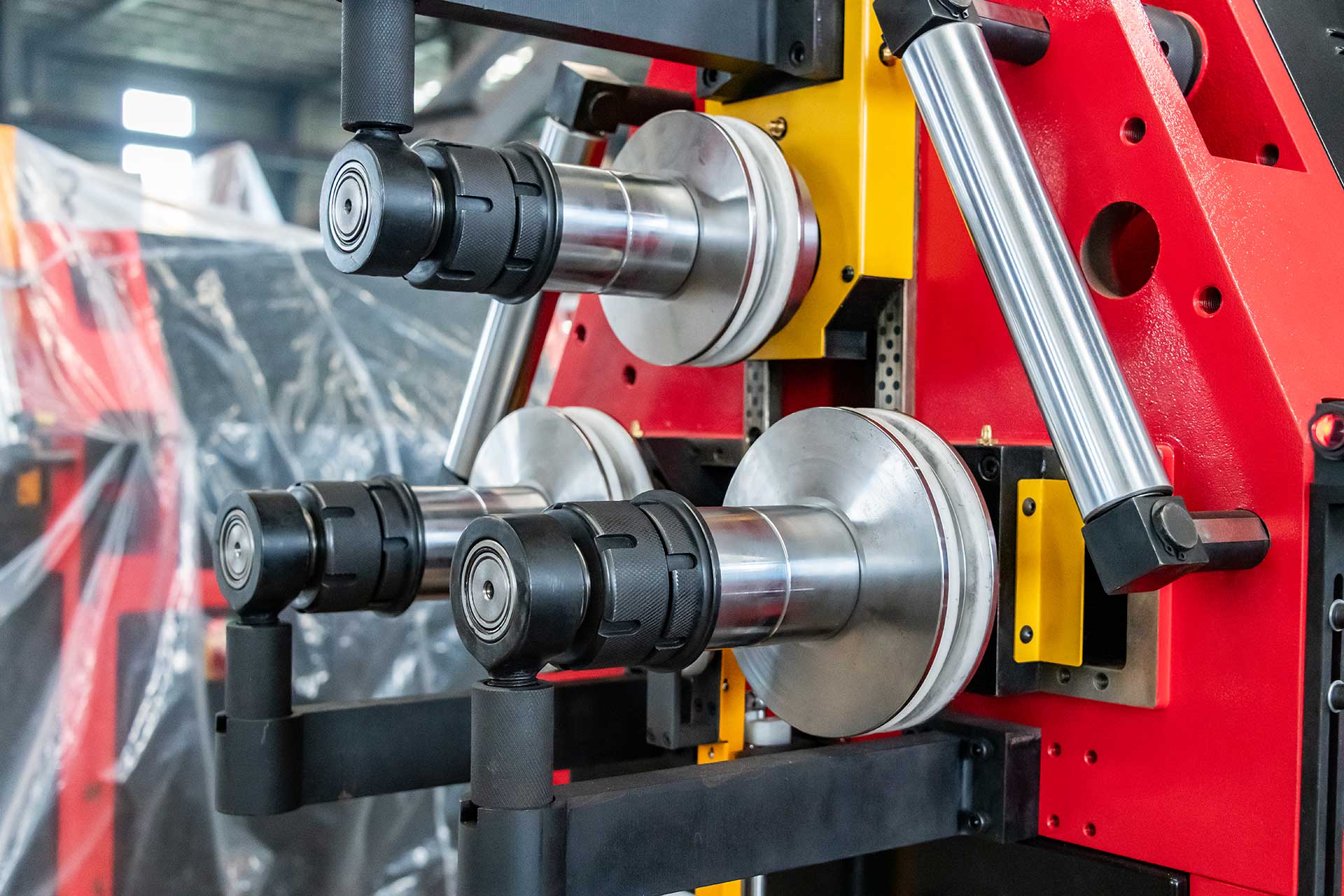
Aluminum Profile Bending Forming (2): Roll Bending
Roll bending of aluminum profiles is a forming method that bends the profile by means of rotating rollers. Section 2: Roll Bending Process Roll bending is a plastic forming process in which a set of rotating rollers gradually bends an aluminum profile into a specified shape. It is widely used in manufacturing circular structures, arc-shaped components, and even multi-radius or three-dimensional spatial parts. Table of Contents This article series is divided into three sections, each focusing on a different aluminum profile bending and forming method. You may navigate to any process below: Aluminum Profile Bending & Forming Processes Stretch Bending…
-
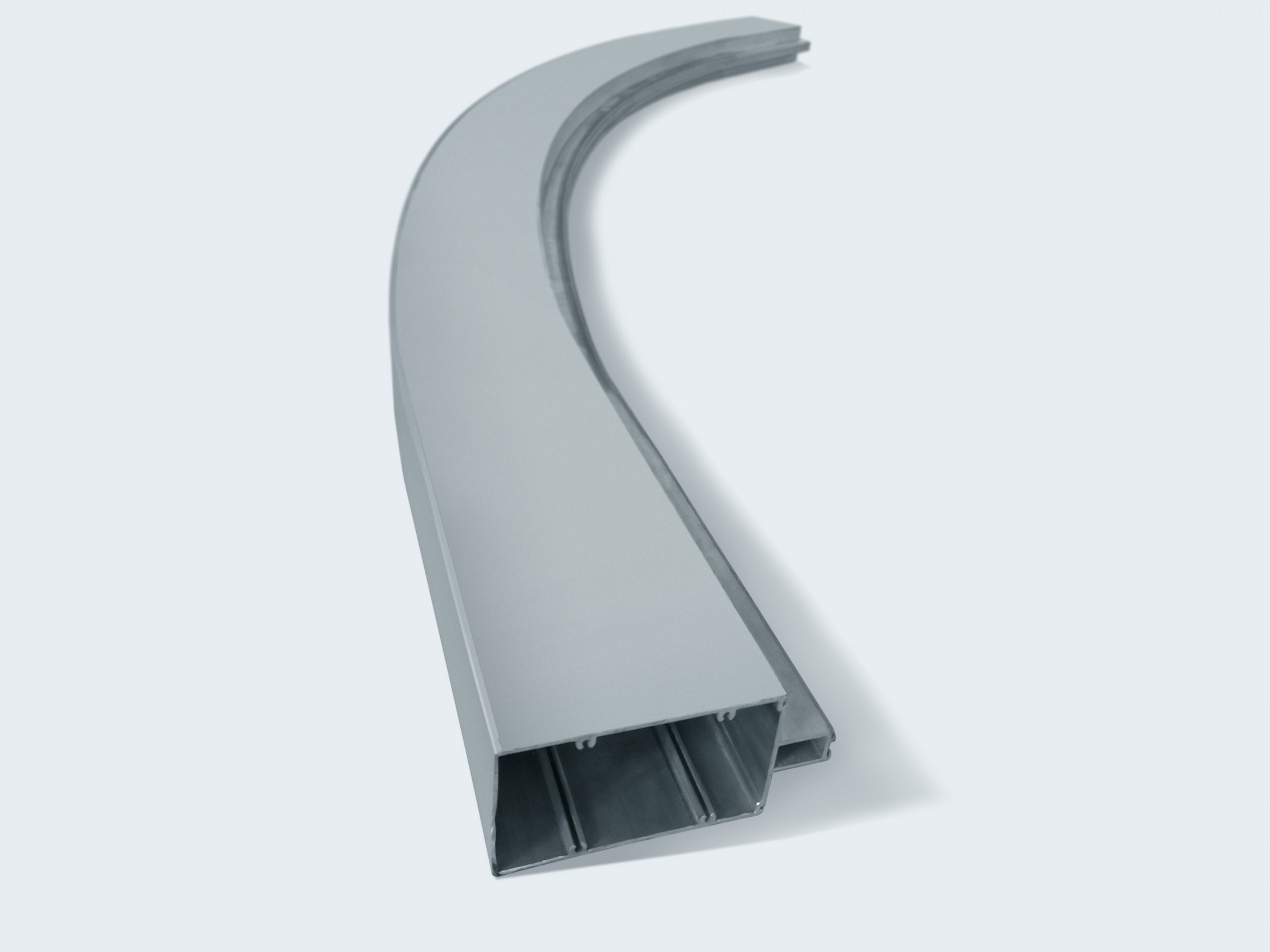
Stretch Forming of Aluminum Profiles: Defects, Mechanisms, and Solutions
Stretch forming enables aluminum profiles to achieve complex, high-precision curvatures with enhanced structural strength and reduced springback. However, improper forming parameters can lead to defects such as fracture, wrinkling, surface distortion, and dimensional deviation. Understanding how stress states influence deformation and how to control process variables is essential to ensure reliable forming quality and cost-effective production. Perhaps first see the full aluminum profile stretch forming process before learning how to solve defects and optimize production. Key Technologies in Stretch Forming The curvature design of stretch-formed parts must not exceed the elongation limit of the material. During Stretch Forming, defects such…
-
Stretch Forming Aluminum Extrusions: Aluminum Profile Bending Process (I)
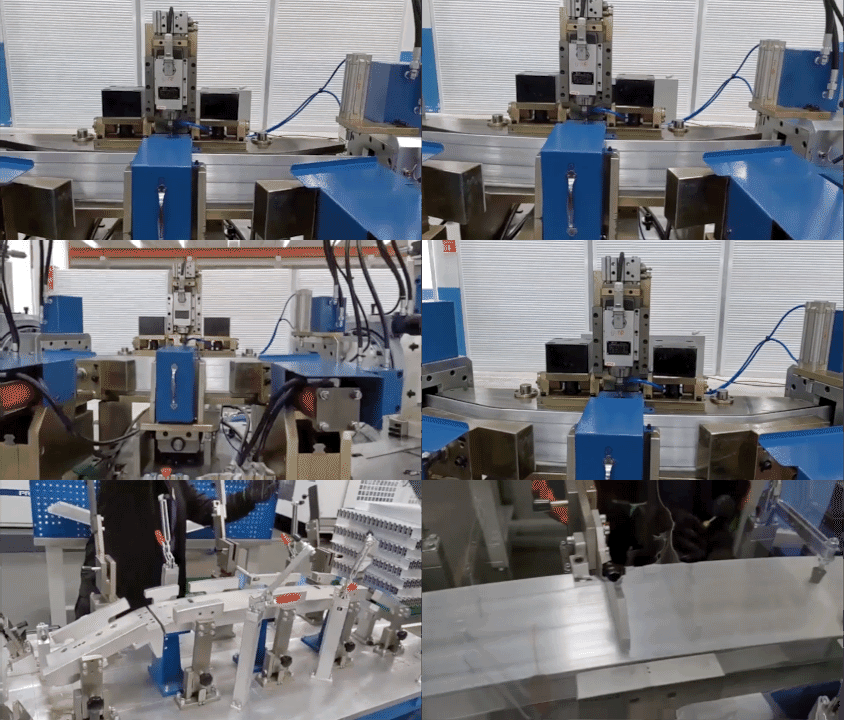
This is the first part of our series on Aluminum Profile Bending & Forming, focusing on the Stretch Bending Process. In this article, we explore how aluminum extrusions are bent using controlled stretching techniques to achieve precise curvature and dimensional accuracy. You’ll learn the principles behind stretch forming, its key advantages, and why it is widely used in industries requiring high-quality, consistent bends in aluminum profiles. Aluminum alloy extrusions are widely used in bending and forming applications due to their excellent plasticity, lightweight characteristics, corrosion resistance, and high specific strength. In particular, 2xxx, 6xxx, and 7xxx series aluminum extrusions can…
-
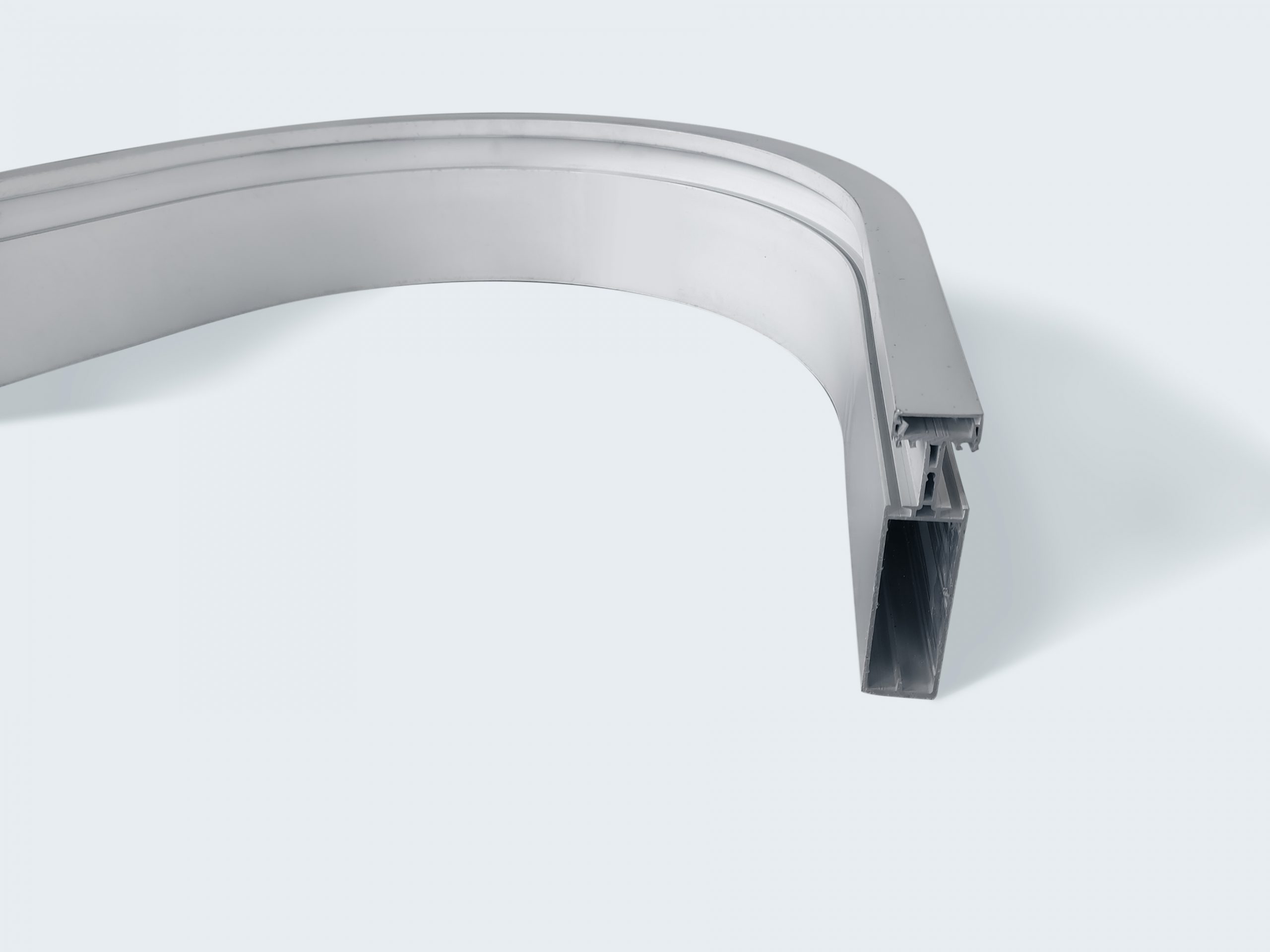
Aluminum Curtain Wall Profile Bending and Free Calculator
The bending process of curtain wall aluminum profiles involves high technical difficulty, mainly in several areas: Solutions of BIT To address the challenges of bending curtain wall aluminum profiles, the PBA aluminum profile bending machine offers several innovative solutions. First, for longer curtain wall profiles, the PBA bending machine is equipped with a powerful support system that ensures the profile receives uniform support during the bending process, preventing localized deformation or uneven bending due to uneven force distribution. This system effectively controls the bending precision and ensures that the profile remains stable throughout the bending process without affecting its structural…
-
Bending Process and Key Considerations for Aluminum Tent Profiles
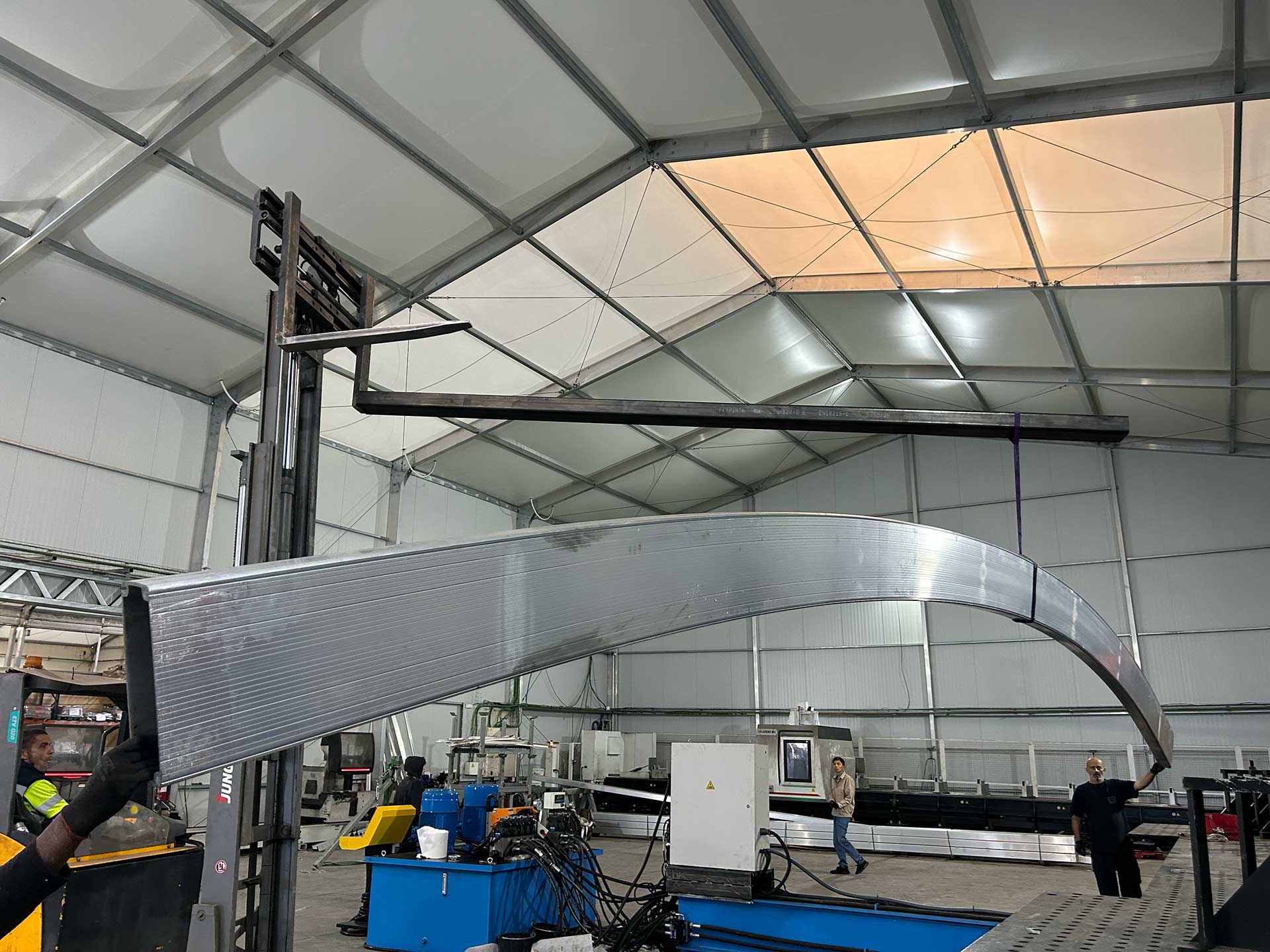
The stretch forming process for roof tent frames applies tension and bending moment at both ends of the tent profile, so that the aluminum tent profile is stretched and bent while wrapped around the forming die. This can effectively reduce the bending rebound and improve the contour accuracy of the tent profile. It is particularly suitable for the bending forming of tent profiles with small deformation and large curvature radius. Roof Tent Profiles often have large cross-sections, requiring careful selection of bending methods. For profiles wider than 200mm, using a stretch forming machine ensures high precision and minimizes deformation and…
-
Steel vs. Aluminum Roll Bending: 4 Key Differences
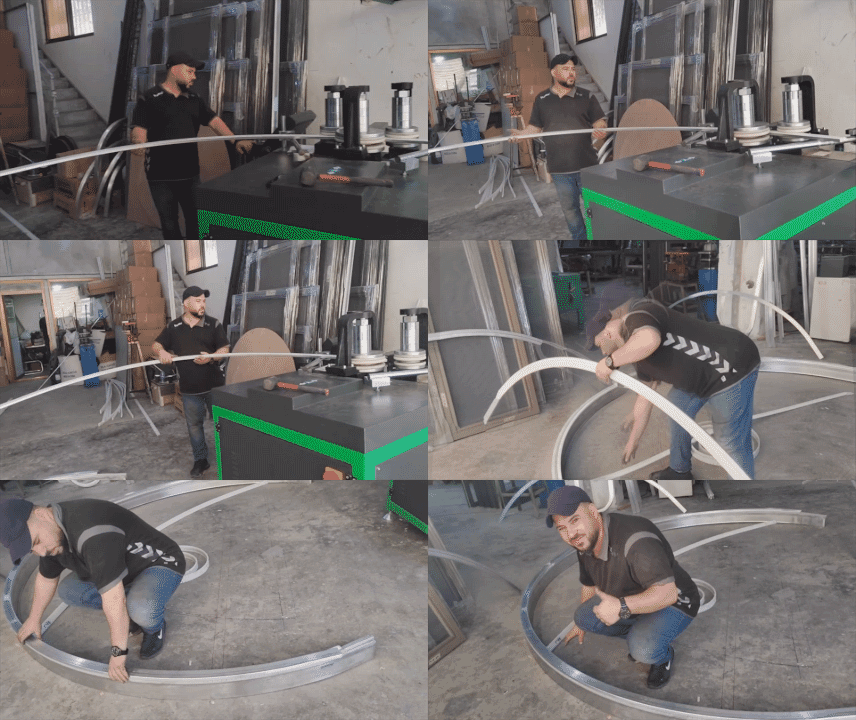
Roll bending of steel structural profiles and aluminum extrusion profiles differs significantly in material properties, process control, and equipment requirements. These differences directly impact the bending force selection, deformation behavior, and precision control. Material Properties Steel structural profiles have higher strength and yield points, requiring greater bending force. In contrast, aluminum extrusion profiles are softer and easier to bend, but they exhibit greater elastic recovery, requiring compensation for springback. Steel has excellent plastic deformation capability, making it less prone to fracture during bending, with minimal springback. In comparison, aluminum has higher elasticity, leading to more noticeable springback, especially in 6000…
-
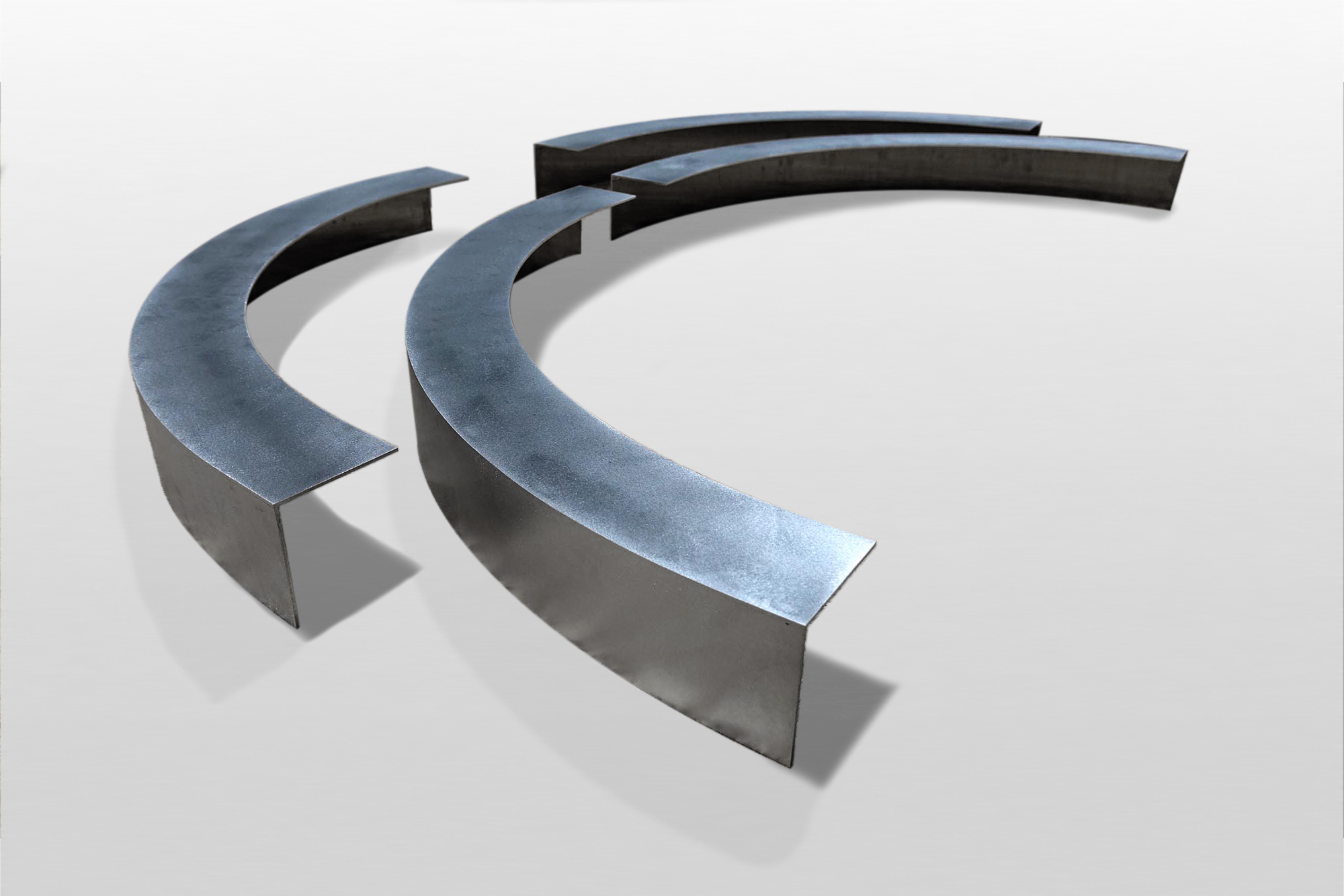
Bending Aluminum Angle
There are many advantages to bending angle aluminum. Angle aluminum is light and strong, and it still maintains high strength after bending, which is suitable for occasions where weight reduction is required. An oxide film will form on the surface of aluminum, making it less prone to rust and suitable for outdoor or humid environments. Angle aluminum is easy to cut, drill and bend, and is suitable for processing complex shapes. The bent angle aluminum can be used for decorative structures, and the surface can also be treated in various ways, such as anodizing or spraying, to look more beautiful.…
-
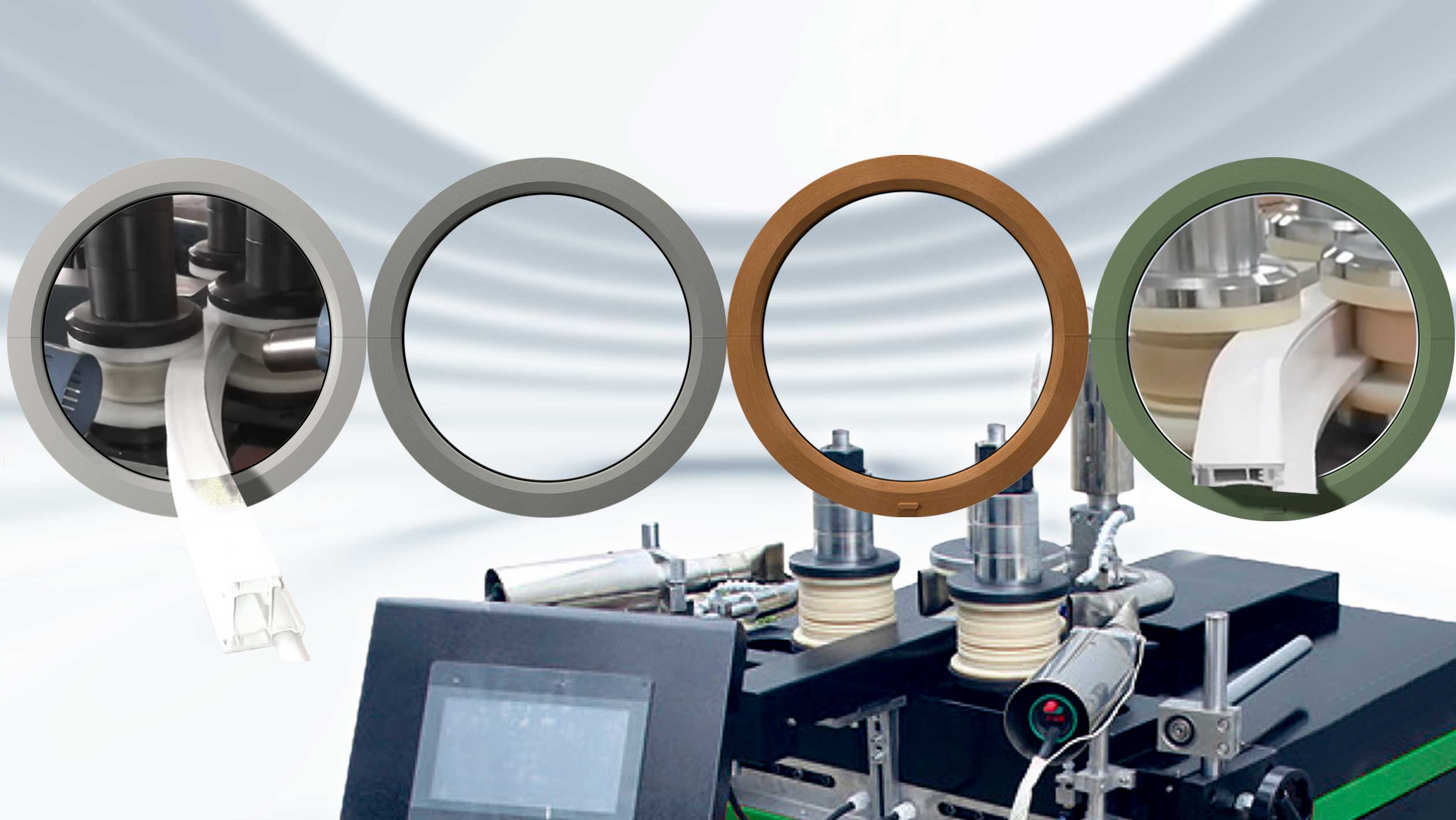
PBA aluminum profile bending machine for bending uPVC profile application
uPVC is an ideal material for window profiles due to its lightweight, durability, thermal insulation, and soundproofing properties. Imagine you are in the kitchen preparing a delicious dessert. You need to knead the dough into a specific shape, then bake it in the oven, and finally achieve a perfectly curved loaf of bread. This process is remarkably similar to how we use hot air guns in a CNC aluminum profile bending machine to heat uPVC window profiles, creating beautiful curved windows. Preparation Before making the dessert, you need to select the right dough. Similarly, before manufacturing curved windows, we need…
-
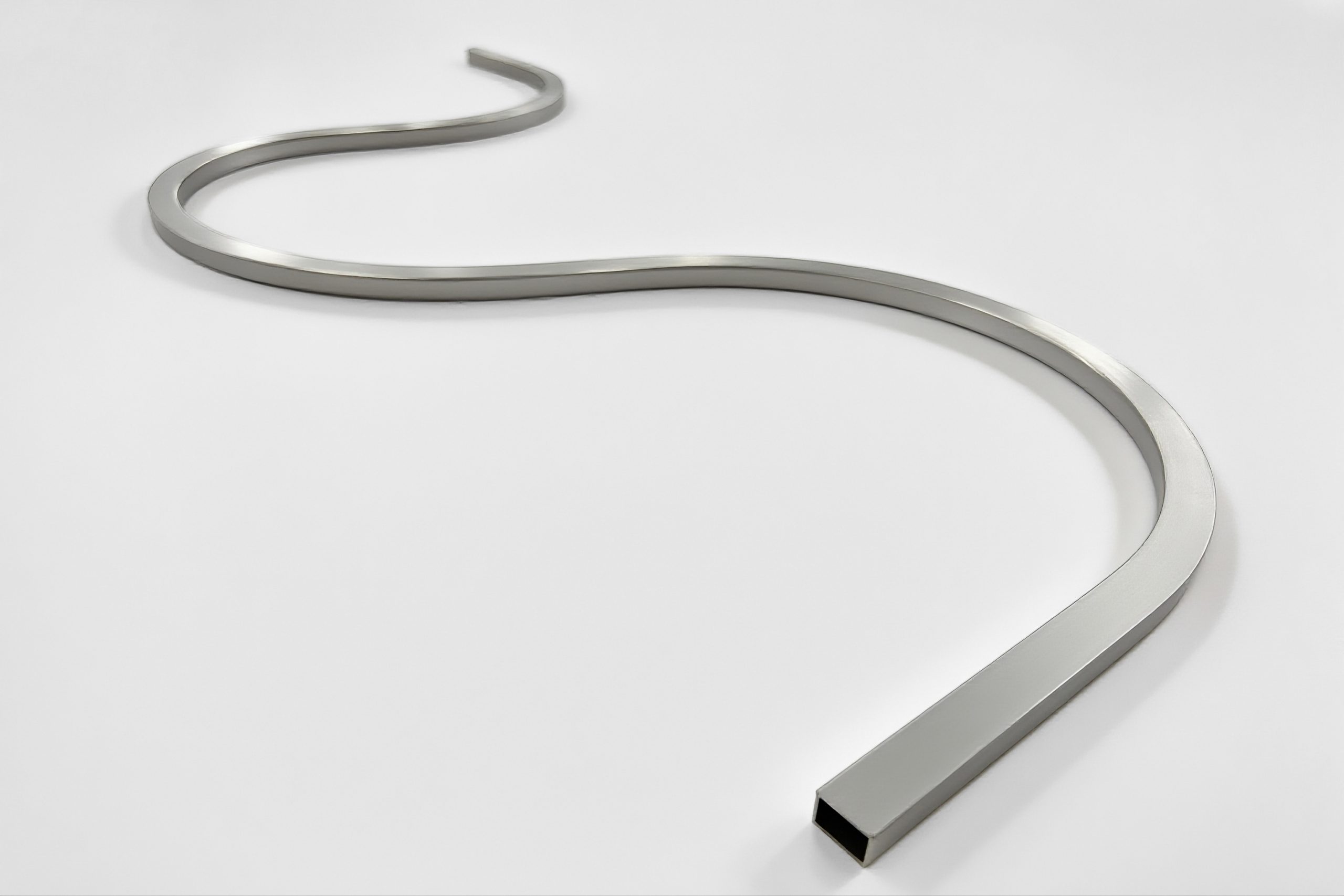
The Bending Radius in Aluminum Bending
The bending radius is a key parameter in aluminum bending, directly affecting the quality and precision of the process. This article highlights the principles of bending aluminum, the factors influencing the bending radius, and how to select and calculate the radius using advanced aluminum bending machines. Principles of Bending Aluminum Bending aluminum involves using mechanical force to shape profiles into specific arcs. During this process, the material undergoes stretching, compression, and shearing, resulting in plastic deformation that creates the desired curve. High-performance aluminum bending machines ensure precision and consistency throughout the process. Key Factors Influencing the Bending Radius Selecting and…
-
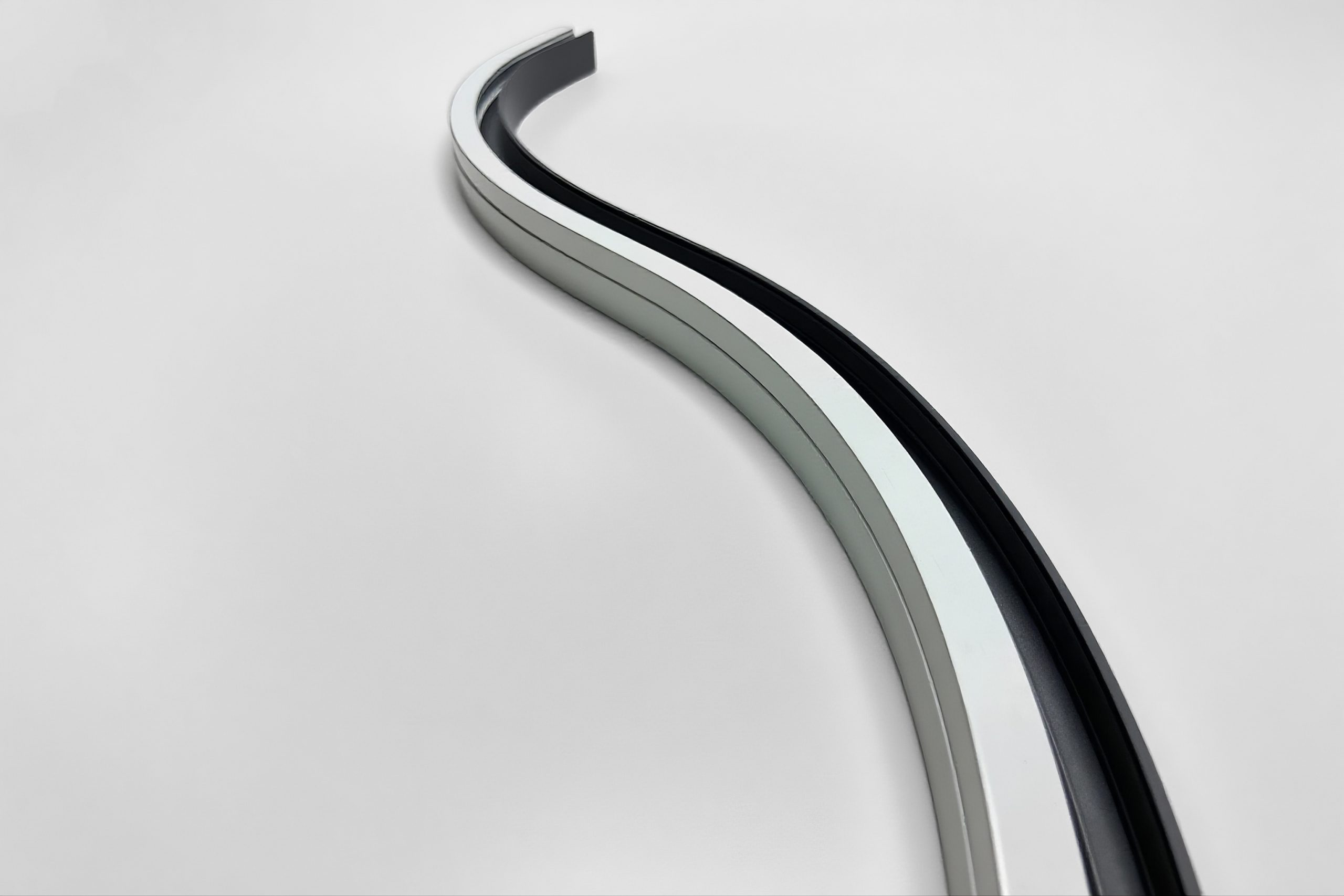
Key Factors for Aluminium Window Bending
Aluminium Window Bending can be one of the simplest methods for shaping aluminum profiles. However, the process can present challenges, depending on several critical factors: Simple Formula for Minimum Bending Radius The minimum Aluminium Window Bending radius can be calculated as:Minimum Bending Radius = Y-axis width × 5 Core Features of Aluminum Window Profile Bending This process is widely used in curtain walls, windows, and decorative projects, offering versatile and effective solutions. It is important to note that the above classification is just one common way to categorize the process. In reality, the characteristics of aluminium window bending are often…
Home »